How quickly can a mobile truck mechanic reach me in Phoenix?
Arrival time depends on your exact location, traffic, road conditions, technician availability and the details of other active calls. When you contact PHX Mobile Truck Repair, share the nearest exit or mile marker, your direction of travel and whether the truck is in an unsafe position. Dispatch can then provide a realistic arrival window and update you if conditions change. Calls along I-10, I-17, Loop 101, Loop 202 and other Phoenix corridors may involve changing traffic patterns, so we avoid promising a fixed minute count before seeing the situation.
Do you provide 24/7 roadside truck repair?
PHX Mobile Truck Repair provides around-the-clock emergency dispatch for commercial truck breakdowns, including nights, weekends and holidays. A technician can evaluate problems such as no-start conditions, air leaks, brake faults, overheating, electrical failures, fuel delivery issues and many trailer concerns wherever the unit is safely accessible. Availability of a particular part, specialist or repair method can vary by situation. When you call, we will gather the truck details, explain the next practical step and let you know whether mobile repair, stabilization or towing is the safest option.
Can you repair my semi truck on the side of the interstate?
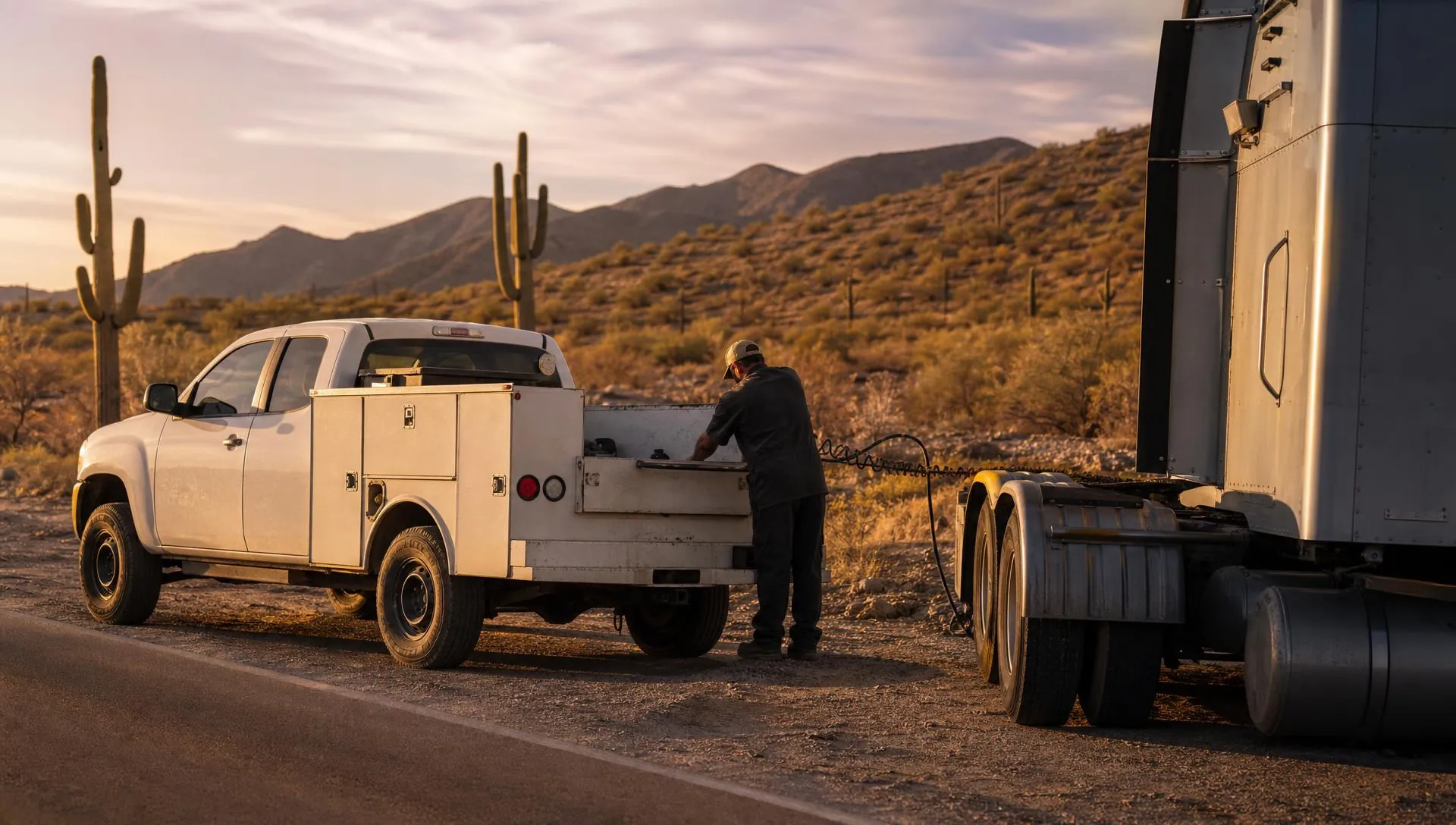
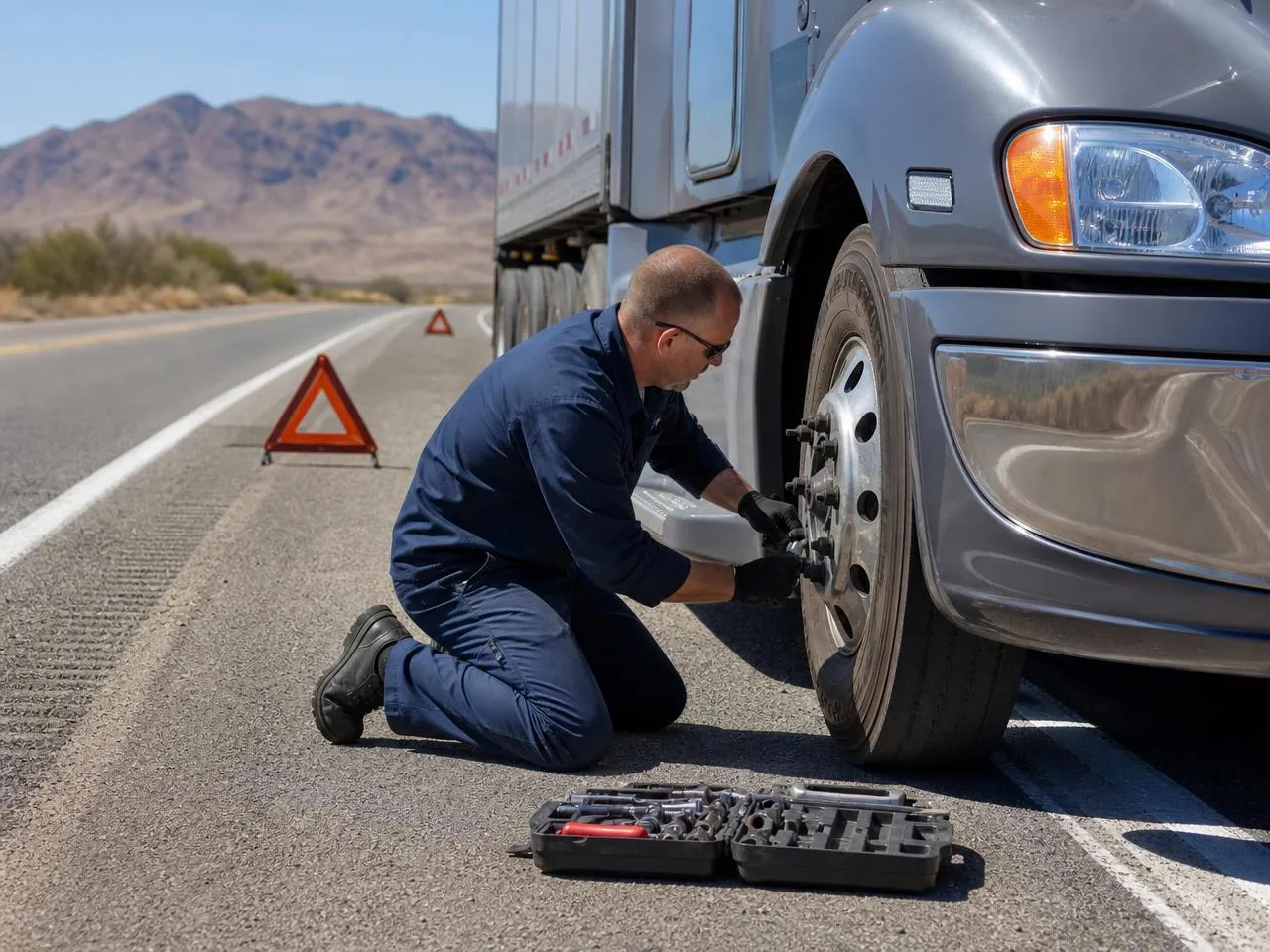
Many semi truck failures can be diagnosed and repaired on a freeway shoulder when the location is safe and the work can be performed without exposing the driver or technician to unnecessary traffic risk. Mobile service commonly addresses air and brake problems, batteries, starters, belts, hoses, electrical faults, lighting and some cooling or fuel issues. First, move as far from traffic as conditions allow, activate hazard lights and follow emergency instructions. If the shoulder, weather or damage makes roadside work unsafe, the technician may recommend securing the unit and arranging a tow.
What types of commercial trucks do you repair?
Our mobile truck repair service is equipped for many Class 6, Class 7 and Class 8 commercial vehicles. That includes semi trucks, day cabs, sleeper tractors, box trucks, dump trucks, flatbeds, utility trucks, construction chassis and delivery vehicles. We work with major makes and models, but the available diagnostic coverage and parts depend on the specific unit. Have the year, make, model, engine, warning messages and trailer type ready when you call. Those details help us match the technician, scan tools and likely replacement parts to the job.
Do you repair trailers and reefer units?
Yes. Mobile trailer service covers common problems with brakes, air systems, ABS warnings, suspension, landing gear, doors, lights, wiring and other components that can keep a load from moving. We also inspect and repair reefer unit concerns such as no-start conditions, temperature alarms, belts, batteries, sensors and selected refrigeration-system faults. Service may take place at a Phoenix loading dock, warehouse facility, truck yard or roadside location. If cargo temperature is at risk, tell dispatch what the unit is carrying and the current alarm or temperature reading.
Can you service my commercial fleet?
Yes. Mobile fleet maintenance is designed for companies that want trucks serviced at their own facility instead of losing productive time to repeated shop trips. We can coordinate preventive maintenance, inspections, fluid and filter service, brake checks, battery and charging-system testing, fault-code reviews and repairs discovered during scheduled visits. Work can be organized around yard capacity, driver schedules and after-hours windows. Fleet managers receive clear notes about completed work and developing concerns, helping prioritize repairs without taking every unit out of service at the same time.
Do you repair DPF and emissions systems?
We diagnose and repair many diesel aftertreatment issues involving DPF, SCR, DEF, sensors, wiring and related engine-control components. A derate, warning light, failed regeneration or poor power can have several possible causes, so the technician begins with fault-code retrieval, visual checks, system readings and a review of the truck's operating symptoms. Depending on the finding, mobile work may include sensor or harness repair, DEF-system service, filter-related assessment or a controlled regeneration when appropriate. Some heavily loaded, damaged or contaminated components may require shop equipment or replacement planning.
Does Arizona heat cause truck breakdowns?
Phoenix heat can expose weaknesses in cooling, charging, starting, air-conditioning and rubber components, especially when a loaded truck is idling, climbing a grade or moving through stop-and-go traffic. High temperatures do not cause every failure, but they can accelerate coolant loss, battery degradation, belt and hose deterioration, fan or thermostat problems and electrical connection issues. A mobile technician can test charging voltage, inspect belts and hoses, check coolant and airflow, and look for the condition behind an overheat rather than simply replacing the first failed part.
What areas around Phoenix do you service?
Our primary market is Phoenix, with mobile coverage extending through Glendale, Scottsdale, Tempe, Mesa, Chandler, Peoria, Surprise, Goodyear, Tolleson and Avondale. Calls commonly come from I-10, I-17, Loop 101, Loop 202, US-60 and SR-51, as well as the Sky Harbor industrial district, freight terminals, truck stops, warehouse districts, distribution centers and industrial parks. Exact availability depends on the truck's location, access and the current dispatch schedule. Give us the address, cross streets or mile marker so we can assess the call accurately.
Will I need to tow my truck?
Not necessarily. Many failures can be repaired or stabilized where the truck sits, including no-start issues, air leaks, batteries, starters, alternators, hoses, belts, lighting, electrical faults and selected brake, fuel, cooling and emissions problems. The technician will assess the failure, access, safety conditions and equipment required before recommending the next step. A tow may still be necessary for major engine or transmission damage, unsafe roadside conditions, severe collision damage or repairs requiring shop machinery. We explain that decision clearly rather than promising an on-site repair before diagnosis.
Can you repair trucks at Phoenix distribution centers and loading docks?
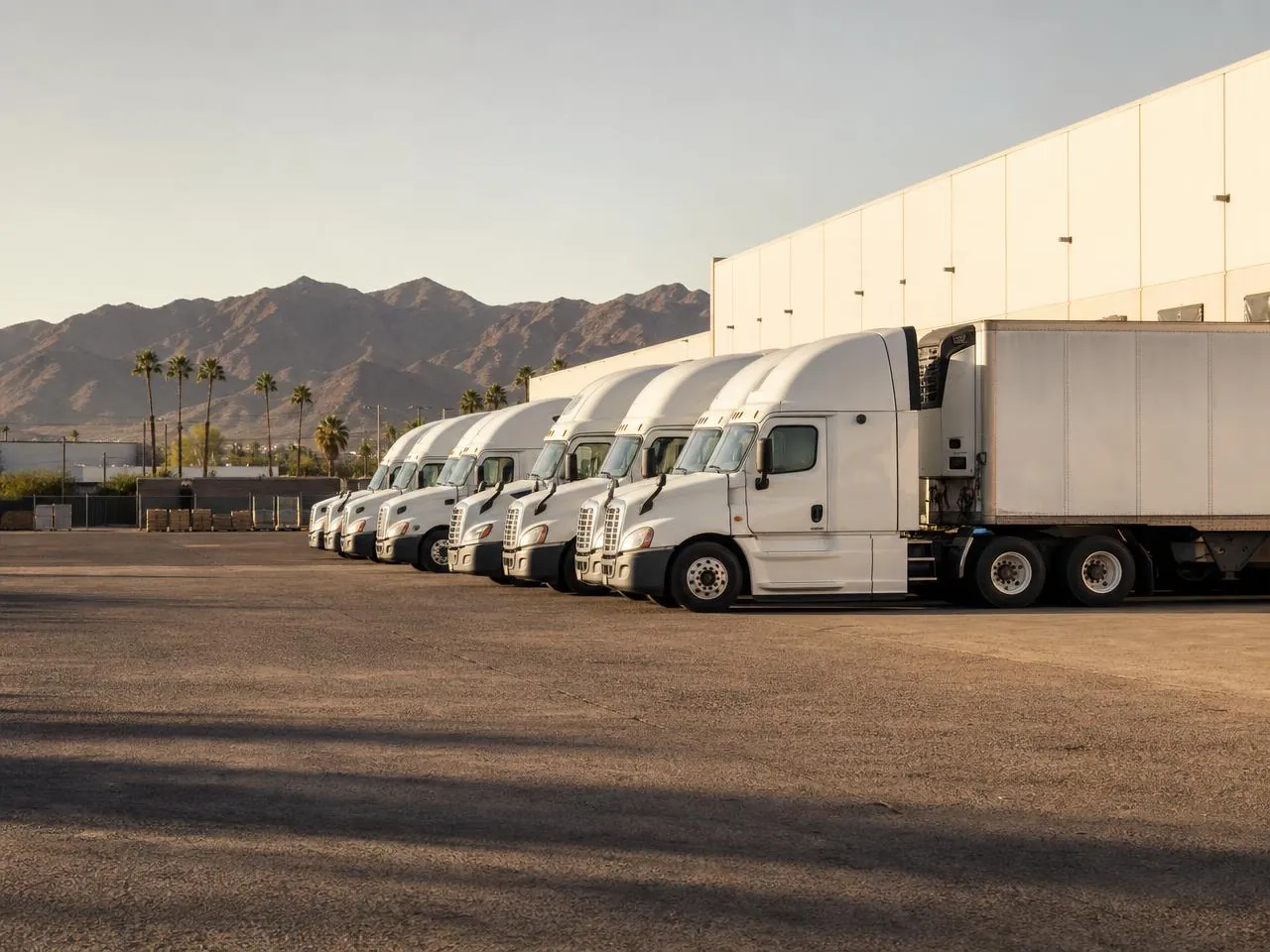
Yes. A large share of our work happens at distribution centers, warehouses and dock doors across Phoenix, Tolleson, Goodyear and the wider valley. We arrive with a fully equipped service truck and work in the space available, whether that is a marked door, a staging lane or an area the facility assigns us. Site rules vary, so tell dispatch if the location requires check-in, a safety vest, an escort or specific hours for outside vendors. Repairing a unit at the dock usually keeps the tractor and trailer together and avoids pulling the truck out of the delivery sequence.
Can you meet a truck at a truck stop or fleet yard?
We do this every day. Truck stops along I-10, I-17, Loop 101 and Loop 202 give us room to work safely, and fleet yards let us handle several units in one visit. Give dispatch the truck stop name and cross street or the yard address and gate instructions, plus the unit number and where it is parked on the lot. If the truck can still move under its own power, parking it away from fuel islands and in a spot with room on both sides helps the technician get to work immediately on arrival.
What should I do if my truck will not build air pressure?
Do not release the brakes or attempt to move the truck until the system holds pressure. Note whether the governor cuts out at all, whether the low-air warning stays on, and whether you can hear an obvious leak at a gladhand, chamber or line. Then call and describe what you observed. Air problems are among the most common on-site repairs we complete, since leaking lines, fittings, gladhand seals, chambers and dryer faults can usually be repaired where the truck sits. Compressor failures and internal valve damage sometimes require more, and the technician will tell you after testing.
Do you repair liftgates and commercial delivery trucks?
Yes. Box trucks, straight trucks and delivery chassis with liftgates are a regular part of our work in Phoenix. Liftgate complaints usually come down to power delivery, batteries and cabling, the pump motor, solenoids, hydraulic leaks or worn controls, and most of those are serviceable at your yard or on a delivery route stop. We also handle the chassis side of these trucks: brakes, electrical faults, charging problems, cooling and no-start conditions. Tell dispatch the liftgate brand and what the gate does or does not do so the technician can bring likely parts.
Do you work on buses, tow trucks and vocational vehicles?
We service a wide range of vocational and commercial equipment, including shuttle and transit-style buses, tow trucks and rollbacks, refuse and vacuum trucks, concrete mixers, bucket and utility trucks, service-body trucks and yard tractors. What we can complete on site depends on the platform, the diagnostics the fault requires and parts availability for that specific unit. Give us the year, make, model, engine and unit number when you call, and we will tell you honestly whether it is a mobile repair or something better handled in a shop with lifts and heavy equipment.
Can you diagnose hydraulic or PTO-related problems?
We diagnose and repair many hydraulic and PTO complaints on dump bodies, liftgates, wreckers, mixers and utility equipment. Typical issues include a PTO that will not engage, slow or weak cylinder movement, leaking hoses and fittings, contaminated or low fluid, and control or electrical faults in the engagement circuit. Hose replacement, fitting repair, fluid service and electrical work are commonly done on site. Pump, valve body and cylinder rebuilds usually need a shop environment. The technician will test the system and explain what can be handled where the truck is parked before any work begins.
What information should I have ready when I call dispatch?
The more specific you are, the faster the right technician and parts get moving. Have your exact location ready, such as a freeway, direction of travel and nearest exit or mile marker, or a yard or dock address with gate instructions. Then share the unit number, year, make, model and engine, what the truck is doing or not doing, any dash lights or fault codes, whether the truck is loaded, and whether it is in a safe position. Also mention site access requirements and the best phone number to reach the driver directly.